Overview
What turns an ordinary person into one of Britain’s most notorious criminals?
Using the remarkable true story of Sheffield’s infamous Victorian criminal, Charles Peace, this engaging KS3 workshop encourages students to investigate the complex relationship between crime, justice and society.
Rather than simply learning about one man’s crimes, students explore the wider issues that shaped Victorian Britain, including poverty, child labour, education, dangerous working conditions and the justice system. Through discussion, historical evidence and enquiry-based activities, pupils consider whether Charles Peace’s life could have taken a different path and debate how Victorian society dealt with crime.
The workshop concludes with a guided visit to the museum’s historic police cells, where students compare nineteenth-century policing and punishment with the criminal justice system of today.
Learning Outcomes
By the end of the session, students will be able to:
- Understand the life and crimes of Charles Peace within their historical context.
- Explore how Victorian society influenced people’s lives and opportunities.
- Evaluate historical evidence to develop informed opinions.
- Compare Victorian and modern approaches to crime and punishment.
- Develop historical enquiry, discussion and critical thinking skills.
Key Enquiry Questions
Throughout the workshop, students investigate questions including:
- Does someone’s childhood influence the choices they make?
- Can poverty or difficult circumstances ever justify crime?
- Were Victorian punishments fair?
- Should prisons punish offenders or help them change?
- Can we judge someone by their appearance?
- Why do some criminals become famous while others are forgotten?
Workshop Activities
A Real Victorian Criminal
Students are introduced to Charles Peace, discovering why he became one of the most infamous criminals of the Victorian era and why his story is still remembered today.
Childhood, Education and Opportunity
Using Charles Peace’s early life as a starting point, students explore childhood in Victorian Britain, including education, child labour and dangerous working conditions.
Through discussion they consider how opportunity, poverty and personal experiences can shape people’s futures.
Victorian Sheffield
Students investigate everyday life in Victorian Sheffield, exploring:
- Poverty and inequality
- Workhouses
- Industrial employment
- Workplace accidents
- The challenges faced by working-class families
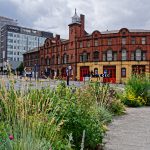
They also discover that the museum stands on the site of Sheffield’s first workhouse, making a direct connection between local history and the workshop.
Crime and Justice
Following Charles Peace’s criminal career from petty theft to murder, students investigate how Victorian courts punished offenders.
Together they debate questions such as:
- Were punishments consistent?
- Did hard labour prevent crime?
- Was rehabilitation considered?
- Would we judge these crimes differently today?
The Man of Many Faces
Students explore how Victorian police identified suspects before modern forensic science.
Using historical wanted posters and criminal illustrations, they investigate why Charles Peace became known as “The Man of Many Faces” and discuss how appearance can influence judgement.
Museum Experience
Following the workshop, students take part in a guided visit to the museum’s historic police cells.
During this session they will discover:
- What it was like to be arrested and imprisoned during the Victorian and early twentieth century.
- How police gathered evidence before the development of modern forensic techniques.
- The role of witness statements, photography and fingerprinting in criminal investigations.
- How policing and punishment have evolved over time.
Students then continue exploring the museum independently, discovering authentic objects and stories that bring the history of crime and punishment to life.
Curriculum Links
This workshop supports learning across several areas of the curriculum, including:
History
- Crime and punishment through time
- Victorian Britain
- Local history
- Historical enquiry
- Cause and consequence
- Similarity and difference
- Historical interpretations
Citizenship
- Justice and fairness
- Rights and responsibilities
- The role of law in society
Skills Developed
Students will develop:
- Historical enquiry
- Critical thinking
- Source analysis
- Evidence evaluation
- Discussion and debate
- Communication
- Teamwork
- Empathy and perspective-taking
- Reasoned judgement
Visit Information
This workshop forms part of a full museum learning day, running from 10:00am until 2:00pm.
During the day, groups rotate through a programme of activities consisting of:
- One 45-minute workshop
- One 45-minute guided museum experience
- Two 45-minute self-guided museum exploration sessions
- One 45-minute lunch break
This varied programme combines facilitated learning with opportunities for independent discovery across the museum’s galleries.
Practical Information
Suitable for: KS3
Workshop duration: 45 minutes
Museum visit: Full learning day (10:00am–2:00pm)
Group size: Up to 35 students per group
Daily capacity: Up to three groups (approximately 105 students) can be accommodated each day, with groups rotating through the day’s activities.
Accessibility: We are committed to making our learning programme accessible to all learners. Please let us know about any access requirements when booking so we can adapt the session wherever possible.
Why Choose This Workshop?
Using the fascinating true story of Sheffield’s most infamous Victorian criminal, this workshop encourages students to think like historians rather than simply learn historical facts. Through discussion, evidence and enquiry, pupils investigate the social conditions, justice system and personal choices that shaped one man’s life while exploring wider themes of crime and punishment in Victorian Britain.
With strong links to the KS3 History curriculum, authentic museum collections and a guided visit to the museum’s historic police cells, the workshop offers a memorable learning experience that combines local history with critical thinking and historical enquiry.