Overview
What was it like to experience war on your own doorstep?
In this engaging KS3 history workshop, students explore one of the most significant events in Sheffield’s history, the Sheffield Blitz of December 1940.
Using eyewitness accounts, local stories and authentic wartime objects, students investigate why Sheffield became a target during the Second World War and discover how two devastating nights of bombing changed the city forever. Through discussion, evidence and historical enquiry, students examine the experiences of ordinary people caught up in the attacks and consider the difficult decisions faced by those responsible for defending the city.
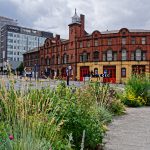
The experience is brought to life through a guided visit to the museum’s Blitz Exhibition and historic Engine House, where students discover the vital role played by Sheffield’s emergency services during the raids.
Pupils are encouraged to dress in wartime clothing to help immerse themselves in the period and bring history to life.
Learning Outcomes
By the end of the session, students will be able to:
- Understand why Sheffield became a target during the Second World War.
- Describe the events of the Sheffield Blitz.
- Analyse eyewitness accounts and historical evidence.
- Explore the experiences of civilians during air raids.
- Understand the role of emergency services during wartime.
- Evaluate the impact of the Blitz on Sheffield and its people.
Key Enquiry Questions
Throughout the workshop, students investigate questions such as:
- Why was Sheffield targeted by German bombers?
- What was a Blitz attack?
- How did people prepare for air raids?
- What was it like to live through the Sheffield Blitz?
- How did emergency services respond during the attacks?
- Were difficult wartime decisions always the right ones?
Workshop Activities
Why Bomb Sheffield?
Students begin by exploring the wider context of the Blitz and discover why German bombers targeted British cities.
Using Sheffield as a case study, they investigate:
- Why cities were targeted during the Blitz.
- The importance of Sheffield’s steel industry.
- How Sheffield contributed to the war effort.
- Why the city’s factories became a strategic target.
Students compare Sheffield with other cities attacked during the Blitz, including London and Coventry.
Waiting for the Attack
Students discover that the Sheffield Blitz did not happen without warning.
Through local accounts and discussion they explore:
- Air raid sirens and warning systems.
- How people reacted to repeated false alarms.
- Life under the constant threat of bombing.
- Why many people became complacent before the attacks.
Using eyewitness accounts, students consider how everyday life continued despite the growing danger.
The Night of the Sheffield Blitz
Students investigate the events of 12 and 15 December 1940 and discover how Sheffield experienced two nights of devastating bombing.
They explore:
- How German bombers located their targets.
- The role of radio navigation beams.
- Why the city centre suffered such extensive damage.
- The destruction of the Marples Hotel.
- The experiences of local people during the raids.
- The response of Sheffield’s emergency services.
Using eyewitness testimony from survivors, students gain an understanding of the human impact of the Blitz and the challenges faced by those living through it.
Students are encouraged to consider one of the key historical debates surrounding the Sheffield Blitz: was diverting German bombers away from the steelworks and towards the city centre justified if it helped protect Britain’s war production?
Wartime Object Handling
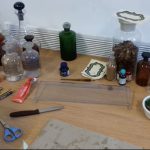
Students examine authentic wartime objects, including gas masks, and discover how civilians prepared for possible attacks.
Through object handling and discussion they investigate:
- Why gas masks were issued.
- Fears of chemical warfare.
- How civilians carried and used gas masks.
- The role of Air Raid Precaution (ARP) wardens.
- How wartime preparations affected everyday life.
Reflection
The workshop concludes with a discussion exploring how Sheffield recovered after the Blitz and how the city continues to remember those affected.
Students reflect on the resilience of local communities and the lasting impact of the attacks on Sheffield’s identity.
Museum Experience
Following the workshop, students take part in a guided visit to the museum’s Blitz Exhibition and historic Engine House.
During this session they will discover:
- The role of Sheffield’s firefighters during the Blitz.
- How emergency services responded to air raids.
- The dangers posed by incendiary bombs.
- The experiences of children during wartime.
- The contribution of Scouts, Guides and other young people during the war.
- Authentic objects connected to Sheffield’s wartime story.
Students then continue exploring the museum independently, discovering vehicles, equipment and personal stories that bring the history of the Second World War to life.
Curriculum Links
This workshop supports learning across several areas of the KS3 curriculum, including:
History
- The Second World War.
- The Home Front.
- Local history.
- Historical enquiry.
- Cause and consequence.
- Historical interpretations.
Citizenship
- Community resilience.
- Individual responsibility.
- The impact of conflict on society.
Skills Developed
Students will develop:
- Historical enquiry.
- Source analysis.
- Evidence evaluation.
- Critical thinking.
- Communication.
- Discussion and debate.
- Empathy and perspective taking.
- Reasoned judgement.
Visit Information
This workshop forms part of a full museum learning day, running from 10:00am until 2:00pm.
During the day, groups rotate through a programme of activities consisting of:
- One 45 minute Sheffield Blitz workshop.
- One 45 minute guided museum experience.
- Two 45 minute self guided museum exploration sessions.
- One 45 minute lunch break.
This varied programme combines facilitated learning with opportunities for independent exploration across the museum’s galleries.
Practical Information
Suitable for: KS3
Workshop duration: 45 minutes
Museum visit: Full learning day (10:00am to 2:00pm)
Group size: Up to 35 students per group
Daily capacity: Up to three groups (approximately 105 students) can be accommodated each day, with groups rotating through the day’s activities.
Accessibility: We are committed to making our learning programme accessible to all learners. Please let us know about any access requirements when booking so we can adapt the session wherever possible.
Why Choose This Workshop?
Using Sheffield’s own wartime story, this workshop enables students to explore the Second World War through the experiences of local people. Through eyewitness testimony, authentic artefacts and historical enquiry, students gain a powerful understanding of how war affected ordinary families, emergency service workers and communities across the city.
Combined with a guided visit to the museum’s Blitz Exhibition and historic Engine House, the workshop offers a unique opportunity to explore one of Sheffield’s most significant historical events in the very city where it happened.