Overview
What would you do if an entire city had to be rebuilt?
Following the devastation of the Great Fire of London, thousands of homes, businesses and public buildings were destroyed. The disaster created an opportunity to redesign the city, making it safer, stronger and better prepared for the future.
In this creative cross curricular workshop, pupils explore how London was rebuilt after the fire and why architects had to think carefully about materials, street layouts, cost, safety and appearance.
Through discussion, historical enquiry and practical design, pupils investigate why the old city burned so quickly before becoming architects themselves and creating their own model buildings inspired by the lessons of 1666.
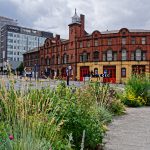
The workshop is complemented by a guided Discover With Us session in the museum’s historic Engine House, where pupils explore how the National Emergency Services Museum’s own building was designed, adapted and changed as emergency services developed.
Learning Outcomes
By the end of the session, pupils will be able to:
- Understand why London had to be rebuilt after the Great Fire.
- Explore why the fire spread so quickly.
- Compare building materials and designs before and after the fire.
- Understand how architects balance safety, cost, practicality and appearance.
- Design and construct their own model building.
- Make connections between historic architecture and the museum’s own building.
Key Enquiry Questions
Throughout the workshop, pupils investigate questions such as:
- Why did the Great Fire of London spread so quickly?
- Why did London need to be rebuilt differently?
- What makes a building safer from fire?
- How do architects balance beauty, practicality and cost?
- How do buildings change as technology develops?
- If Joseph Norton designed West Bar today, what might he do differently?
Workshop Activities
Why Did London Burn?
Pupils begin by revisiting the events of the Great Fire of London and investigating why the fire spread so quickly.
Through discussion, maps and images, they explore:
- How the fire began on Pudding Lane.
- Why narrow streets helped the fire spread.
- The role of building materials.
- How overhanging upper floors affected the spread of fire.
- Why weather and wind made the fire worse.
- What surviving buildings can tell us about London in 1666.
Pupils discover that people already understood some ways to make buildings safer, but cost, space and practicality often shaped how cities were built.
The Great Rebuild
Working as architects and planners, pupils are challenged to design and construct a new building for London.
As they work, they consider:
- Materials.
- Cost.
- Fire safety.
- Space.
- Practicality.
- Appearance.
- How their building would fit into a wider city.
Pupils are encouraged to explain and justify their design choices, thinking carefully about how their building improves on those lost in the fire.
The Real Architects
After completing their own designs, pupils discover how real architects and planners approached the rebuilding of London.
They explore the ideas of Sir Christopher Wren, John Evelyn and the rebuilding commissioners, considering:
- Why ambitious plans were proposed.
- Why many ideas were never fully built.
- How wider streets could improve safety.
- Why brick and stone became more common.
- How the rebuilding of London influenced the city’s future.
Pupils compare their own ideas with those proposed after the Great Fire and consider which solutions would have worked best.
Reflection
The workshop concludes with a discussion about how disasters can lead to change, creativity and innovation.
Pupils reflect on how the Great Fire changed London and how architects must continue to design buildings that meet the needs of the people who use them.
Discover With Us: Architecture and the Engine House
Following the workshop, pupils take part in a guided Discover With Us session in the museum’s historic Engine House.
Using the museum building as a real life case study, pupils explore how architects must balance appearance, practicality, cost and safety when designing buildings.
During the session they will discover:
- Why West Bar became Britain’s first purpose built combined Police, Fire and Ambulance Station.
- How architect Joseph Norton designed a building that was both practical and impressive.
- Why the building needed large doors, engine bays, stables and working spaces.
- How horse drawn emergency vehicles shaped the original design.
- How the arrival of motor vehicles meant the building had to change.
- Why the front of the building was designed to look grand and symmetrical.
- Why the working areas at the rear were more practical and less decorative.
- How emergency service buildings must adapt as vehicles, equipment and regulations change.
Pupils compare the rebuilding of London after the Great Fire with the design and evolution of West Bar, discovering that successful architecture is about solving problems as well as creating beautiful buildings.
Students then continue exploring the museum independently, discovering how emergency services, vehicles and buildings have continued to evolve over more than three centuries.
Curriculum Links
This workshop supports learning across several areas of the curriculum, including:
History
- The Great Fire of London.
- Events beyond living memory.
- Local history.
- Cause and consequence.
- Similarities and differences between past and present.
- Historical enquiry.
Art & Design
- Creative design.
- Three dimensional making.
- Designing for a purpose.
- Evaluating ideas.
Design & Technology
- Structures.
- Materials.
- Design process.
- Problem solving.
- Testing and evaluating.
Skills Developed
Pupils will develop:
- Creative thinking.
- Design skills.
- Problem solving.
- Historical enquiry.
- Observation.
- Communication.
- Teamwork.
- Evaluation.
- Reasoned decision making.
Visit Information
This workshop forms part of a full museum learning day, running from 10:00am until 2:00pm.
During the day, groups rotate through a programme of activities consisting of:
- One 45 minute Rebuilding London workshop.
- One 45 minute Discover With Us guided museum experience.
- Two 45 minute self guided museum exploration sessions.
- One 45 minute lunch break.
This varied programme combines facilitated learning with opportunities for independent exploration across the museum’s galleries.
Practical Information
Suitable for: KS2 & KS3
Workshop duration: 45 minutes
Museum visit: Full learning day, 10:00am to 2:00pm
Group size: Up to 35 pupils per group
Daily capacity: Up to three groups, approximately 105 pupils, can be accommodated each day, with groups rotating through the day’s activities.
Accessibility: We are committed to making our learning programme accessible to all learners. Please let us know about any access requirements when booking so we can adapt the session wherever possible.
Why Choose This Workshop?
This creative workshop gives pupils the chance to think like architects, designers and problem solvers. By exploring how London was rebuilt after the Great Fire, pupils discover how practical problems can inspire creative solutions.
The session is made unique by connecting the story of London’s rebuilding with the National Emergency Services Museum’s own historic building. Through the Discover With Us session, pupils see how architecture changes over time as emergency services, vehicles and technology develop.
Combining history, art, design and local heritage, this workshop offers a memorable cross curricular learning experience.