RNLI Postcard
Object Category: Archive
Object Type: Postcard
Object Name: RNLI Postcard
Service Category: Rescue
Accession: SHENE.2022.23
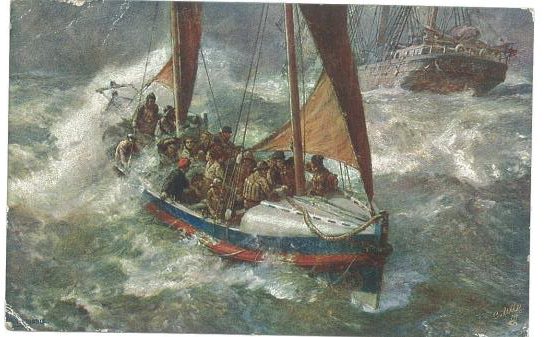
Visual Description: Postcard with a reproduction of a seascape painting on the obverse side; a lifeboat in sail, crew wearing lifejackets, and rescued passengers with a ship in the background. The reverse is affixed with a red one-penny postage stamp (featuring George V), a postmark stating ‘Buy National War Bonds’, and a handwritten message in black ink.
Abstract: Produced for the RNLI by Raphael Tuck & Sons, this postcard features a painting entitled Saved by Bernard Gribble. The card was used and posted on 10th September 1918. The handwritten message is largely illegible and partly obscures the postcard’s printed caption which, in its entirety, read: ‘Mr Gribble’s fine picture “Saved” gives a good idea of the national and heroic work in which the Life-Boat service is constantly engaged, day and night, winter and summer, in peace and in war. Over 54,000 lives saved. The institution receives no subsidy from the state. The Life-Boat Service is the Red Cross of the Sea’. The painter, Bernard Gribble (1872–1962), was a British artist and illustrator who specialised in marine subjects.
Service Context: RNLI
Established in 1824, the Royal National Lifeboat Institution is the UK’s largest lifeboat service. It is a charity with lifeboats staffed largely by volunteers. The RNLI operates under the statutory primacy of HM Coastguard, who direct all lifesaving operations at sea and summon the RNLI following a 999 or Mayday call.
Object Date: 1918
Museum Collection: Core Collection
Object Collection: SFPM Collection
Source Category: Donation
Location: In Store
Sheffield Blitz Duty Book
Object Category: Archive
Object Type: Ledger
Object Name: Sheffield Blitz Duty Book
Service Category: Fire & Rescue
Accession: SHENE.2024.216
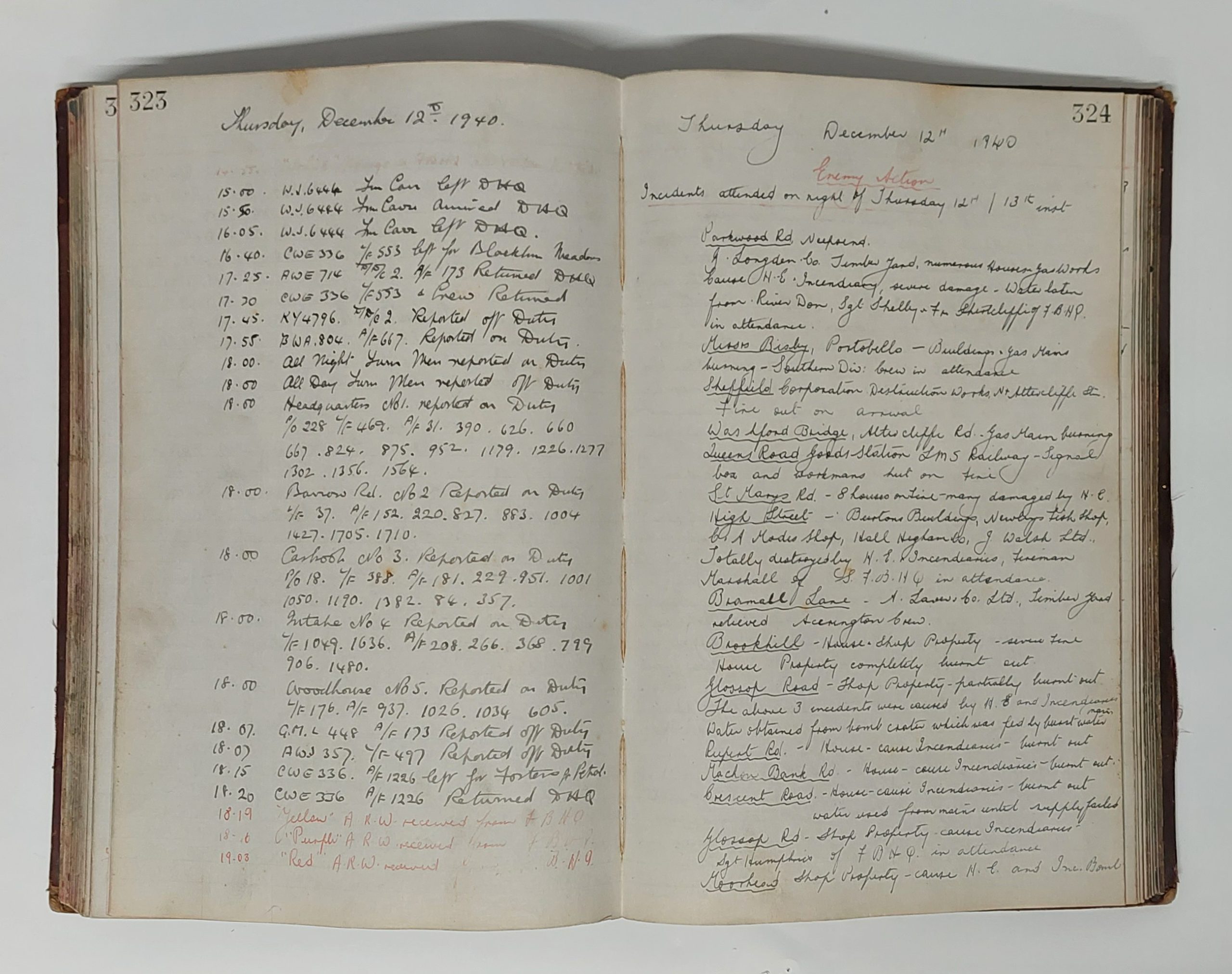
Visual Description: Maroon, hard-cover ledger with marbled end papers. ‘DUTY BOOK’ embossed in gold lettering on the spine.
Abstract: This ledger contains a handwritten record of incidents and fire service responses during the Sheffield Blitz of 1940. It is one of several Auxiliary Fire Service (AFS) station records compiled in Sheffield between November 1939 and October 1941. Inscribed as an AFS ‘Eastern Division Duty Book’, it likely relates to activity at Carbrook Auxiliary Fire Station. The ledger documents a range of activities including daily logs; fire reports between 03.01.1940 and 21.03.1941; details of Air Raid Warden messages received and enemy action responses; and a list of incidents attended between Thursday 12 December and Monday 16 December 1940 (the Sheffield Blitz).
Service Context: Wartime Response Services
The outbreak of the Second World War (1939–1945) saw the reorganisation of the UK’s emergency services into nationally organised wartime response units. Civilian volunteer services were formed in the run-up to war, including the Air Raid Precautions (ARP), which operated ambulance services and wardens from 1937, and the Auxiliary Fire Service (AFS), established in 1938. A reorganisation in 1941 saw the AFS merge with professional fire brigades to form the National Fire Service (NFS), while the ARP was renamed the Civil Defence Service.
Object Date: 1940–1941
Museum Collection: Core Collection
Object Collection: SFPM Collection
Source Category: Donation
Location: In Store
Associated Events: Second World War; Sheffield Blitz
Georgian Truncheon
Object Category: Equipment and Technology
Object Type: Truncheon
Object Name: Georgian Truncheon
Service Category: Police
Accession: SHENE.2024.108
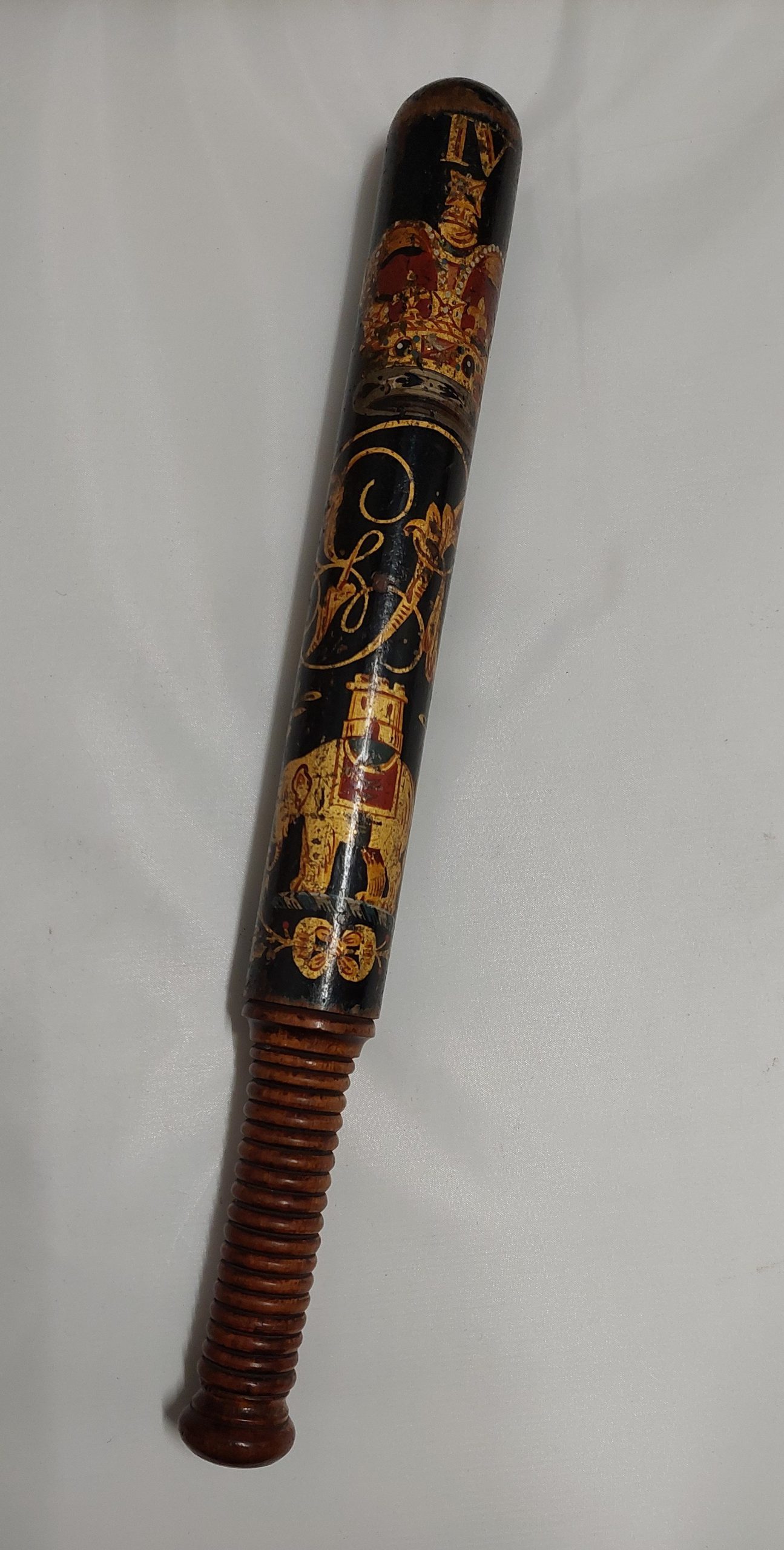
Visual Description: Wooden truncheon with hand-painted decoration including the Royal Cypher of George IV and an ‘Elephant & Castle’ emblem, with a ribbed grip.
Abstract: A truncheon/warrant tipstaff of a constable or watchman of the ‘Elephant & Castle’ area of London. Dating to the reign of George IV, this truncheon pre-dates the foundation of the Metropolitan Police in 1829. Truncheons of this period could be used for self-defence, but primarily acted as symbols of authority (similar to the police warrant card today) and so were decorated with official motifs. This example includes the Royal Cypher and Crown along with the ‘Elephant and Castle’ motif of the holder’s local area of jurisdiction in Southwark, south London. The area derives its name from the local coaching inn, the ‘Elephant and Castle, Newington’. The symbol shows an elephant with a ‘howdah’, or carriage, positioned on its back. The howdah is in the form of a fanciful castellated carriage suggestive of a war elephant. The name Elephant and Castle was a popular one for public houses and was also used as a heraldic crest by the Worshipful Company of Cutlers in London (though any link between that guild and the Southwark area is disputed).
Service Context: Pre-modern Policing
Prior to the arrival of the ‘New Police’ in the mid-19th century, policing in England was highly fragmented, without any standardised, state-backed police service. Since the Middle Ages, most areas relied on part-time volunteers acting as Parish Constables or Night Watchmen. In the 18th century, the Industrial Revolution created challenges for this ‘Old Policing’ system. The growth of cities with large populations meant criminals could evade capture. Various initiatives emerged: private individuals acted as paid ‘Thief Takers’, while some local authorities organised their constabularies more efficiently through Improvement Commissions. In London, magistrates and private companies began to pay and organise officers, leading to the creation of the Bow Street Runners (1749) and the Thames River Police (1798). However, there was no consistent national standard of policing, and jurisdictions were not clearly defined until statutory, centrally organised forces were established throughout England from c.1829 onwards.
Object Date: c.1820–1829
Museum Collection: Core Collection
Object Collection: SFPM Collection
Source Category: Donation
Location: In Store
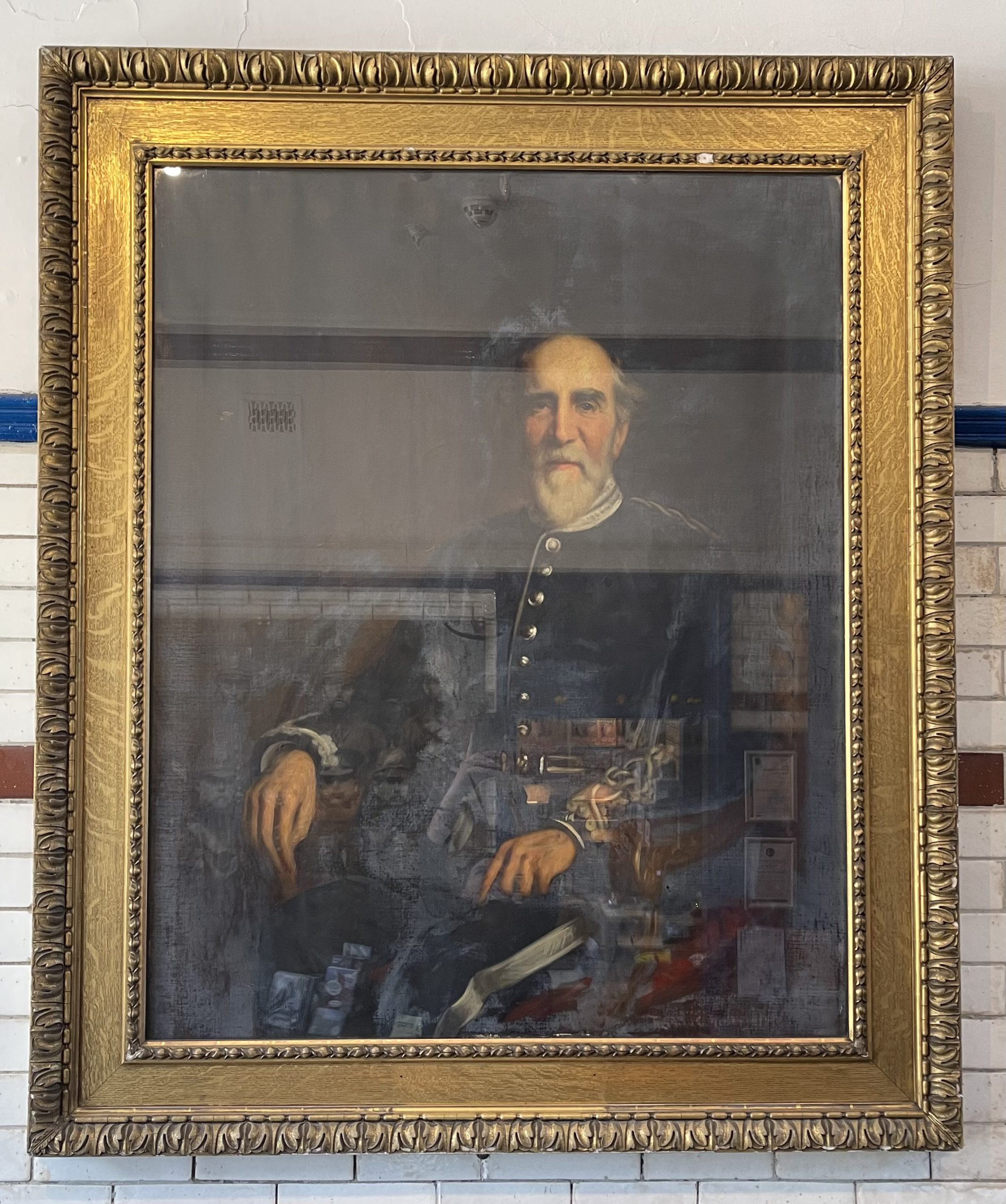
Portrait of Chief Constable John Jackson
Object Category: Social and Cultural History
Object Type: Painting
Object Name: Portrait of Chief Constable John Jackson
Service Category: Police
Accession: SHENE.2023.541
Visual Description: Framed oil painting; a portrait of Chief Constable John Jackson, seated in uniform.
Abstract: This portrait was commissioned to mark 50 years of police service by John Jackson, Chief Constable of Sheffield City Police. It was dedicated at a ceremony in the city’s Cutlers’ Hall in January 1896 and presented to Jackson by the 15th Duke of Norfolk. The artist was the American Herman G. Herkomer (1862–1935), a successful portrait painter who studied in Paris, London and Munich, and exhibited at the Royal Academy of Arts and the Paris Salon. Other examples of Herkomer’s work are held by the Wallace Collection and Cambridge University.
John Jackson, the subject of the portrait, was born in Cumberland. He first served with the Lancashire County Constabulary before becoming Chief Constable of Oldham. He arrived in Sheffield in 1858 to lead the Sheffield Police Force and remained in post for 40 years. Highly respected within the city, he was celebrated for his personal bravery during the Sheffield Flood of 1864. He was instrumental in commissioning Sheffield’s West Bar Station, the first purpose-built combined Police, Fire and Ambulance Station in England. Jackson died in 1898, with his obituary noting that his loss “creates a void in the life of Sheffield which it will be no easy task to fill”.
Service Context: 19th Century Policing
Modern policing originated with the establishment of state-backed, centrally organised police forces across England between c.1829 and 1854. These ‘New Police’ were a response to the Industrial Age and replaced the fragmented policing system that had endured, with limited improvements, since the Middle Ages. Based on the model of Sir Robert Peel’s Metropolitan Police, they comprised professional, full-time officers. During the 19th century, police forces were often also responsible for organising local fire brigades and ambulance services, alongside maintaining law and order. The first detective units and Criminal Investigation Departments (CID) emerged in the mid-to-late 19th century, alongside early developments in forensic investigation.
Object Date: 1895
Museum Collection: Core Collection
Object Collection: SFPM Collection
Source Category: Donation
Location: On Display
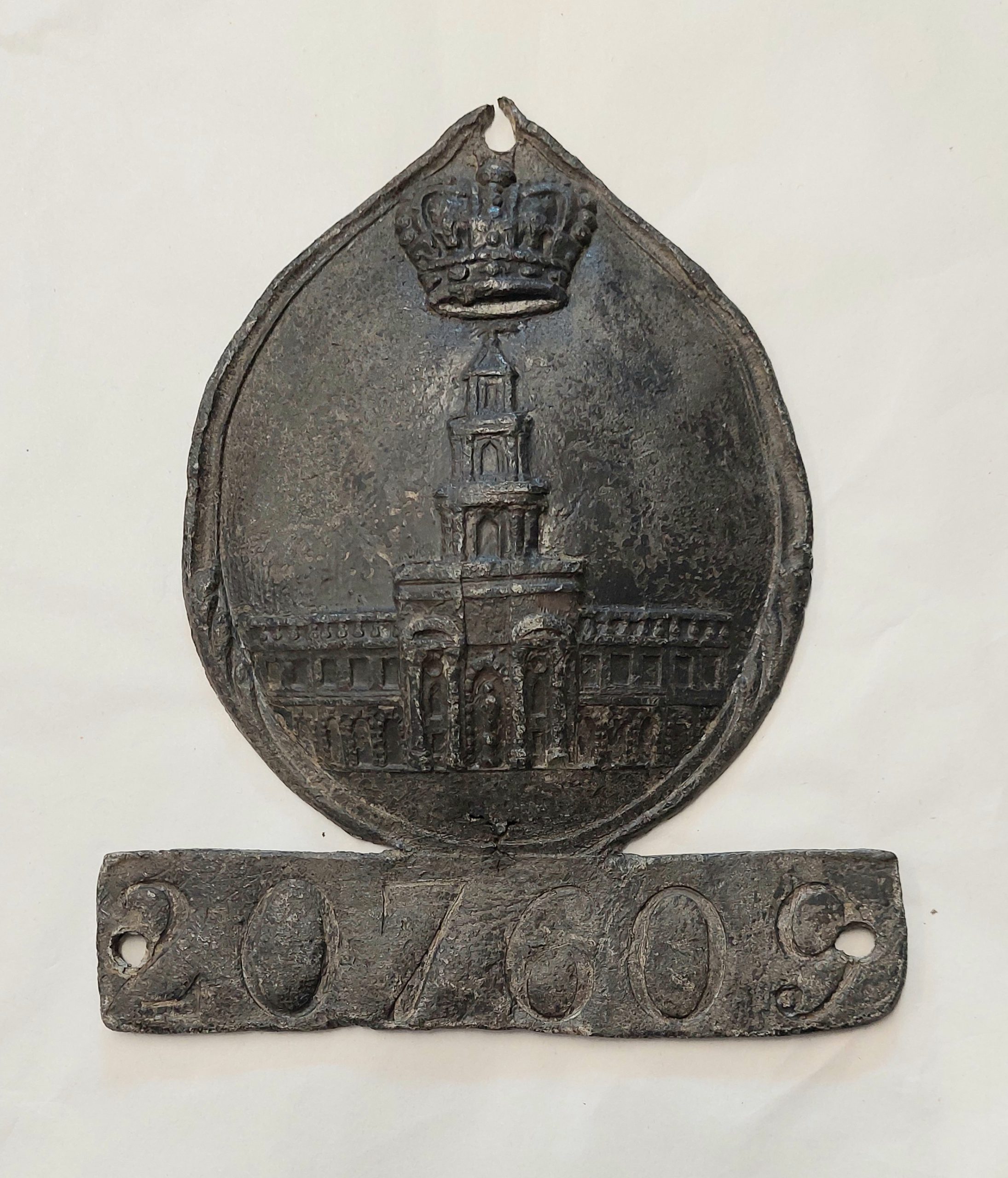
Royal Exchange Fire Mark
Object Category: Social and Cultural History
Object Type: Fire Mark
Object Name: Royal Exchange Fire Mark
Service Category: Fire and Rescue
Accession: SHENE.2024.21
Visual Description: Oval-shaped lead plaque featuring an image of a building topped by a crown. The base forms a rectangle engraved with the number 207609.
Abstract: A Fire Mark issued by the Royal Exchange Assurance Company (which existed from 1720 to 1968), featuring the company’s emblem and an insurance policy number. The building emblem likely depicts the second Royal Exchange, constructed following the Great Fire of London. Fire Marks were issued by insurance company fire brigades to those who paid for insurance cover. Plaques bearing the company logo were attached to insured buildings to identify them to company fire brigades. Fire Marks were produced in a range of materials including lead, brass, iron, copper, tin plate, porcelain and stone. They typically displayed the company’s name, an insurance policy number and symbolic imagery.
Service Context: Insurance Brigade Era
Following the Great Fire of London in 1666, voluntary community firefighting began to be complemented and later replaced by professional fire brigades maintained by private insurance companies, operating from around 1680. From the 1820s onwards, these brigades were gradually superseded by local authority-run municipal fire brigades.
Object Date: Late 18th Century
Museum Collection: Core Collection
Object Collection: SFPM Collection
Source Category: Donation
Location: In Store
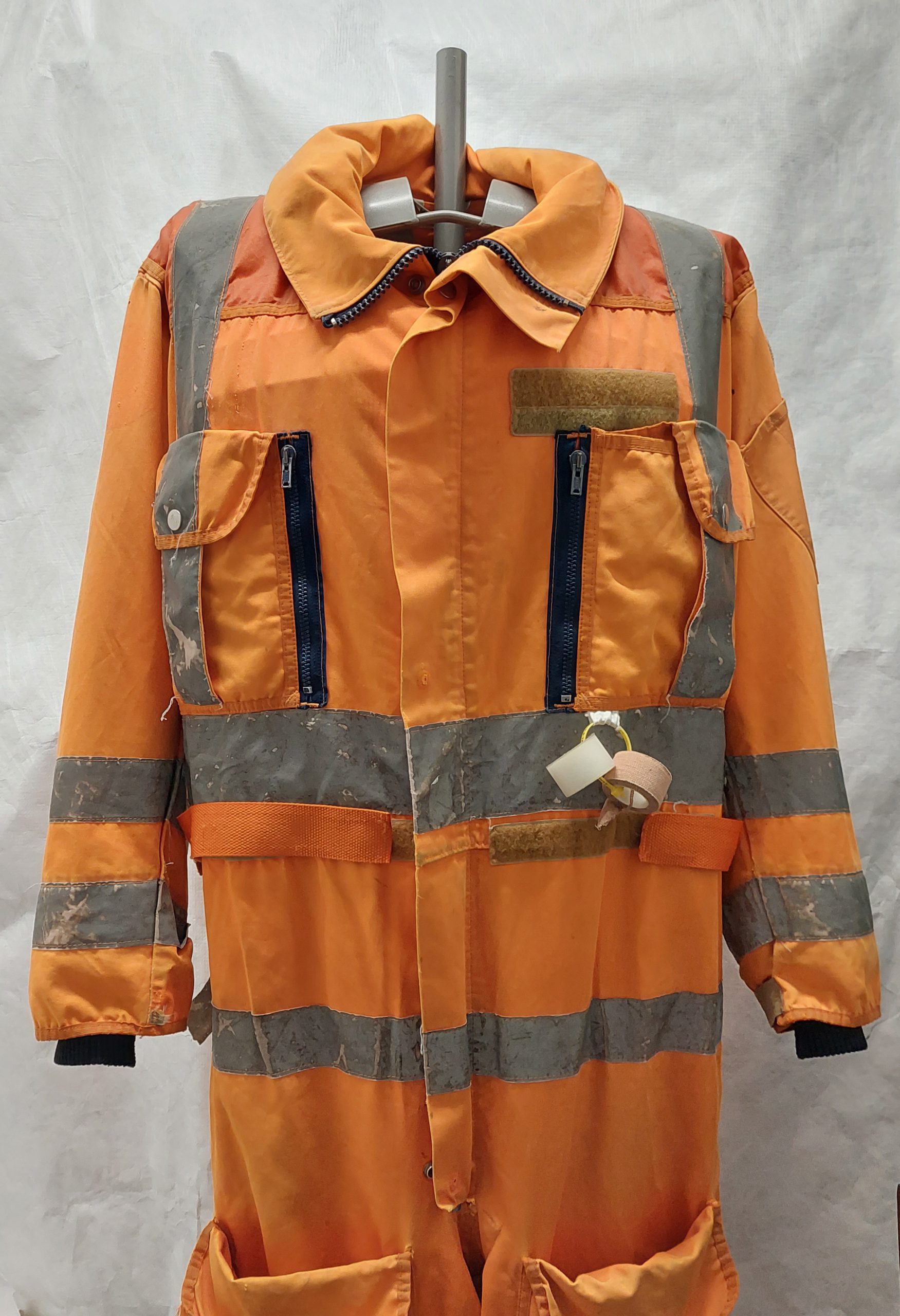
7/7 Medical Flight Suit
Object Category: Uniform
Object Type: Personal Protective Equipment
Object Name: 7/7 Medical Flight Suit
Service Category: Ambulance
Accession: SHENE.2023.02.3
Visual Description: High-visibility orange flight suit with reflective tape.
Abstract: Flight suit worn by Helicopter Emergency Medical Service (HEMS) Paramedic Lee Parker of London Air Ambulance during the response to the 7th July 2005 London Bombings. Lee joined the Air Ambulance in 2002 and served for 20 years.
Service Context: Air Ambulance
Air Ambulance services in England originated in the 1980s. They are charitable organisations that do not receive state funding but operate under the direction of the 999 ambulance system as ‘asset’ organisations for NHS Ambulance Services. Their medical staff are sometimes seconded from the NHS.
Object Date: c.2005
Museum Collection: Core Collection
Object Collection: Lee Parker Collection
Source Category: Donation
Location: On Display
Associated Objects: AG: SHENE.2023.02
Associated Events: 7th July 2005 London Bombings
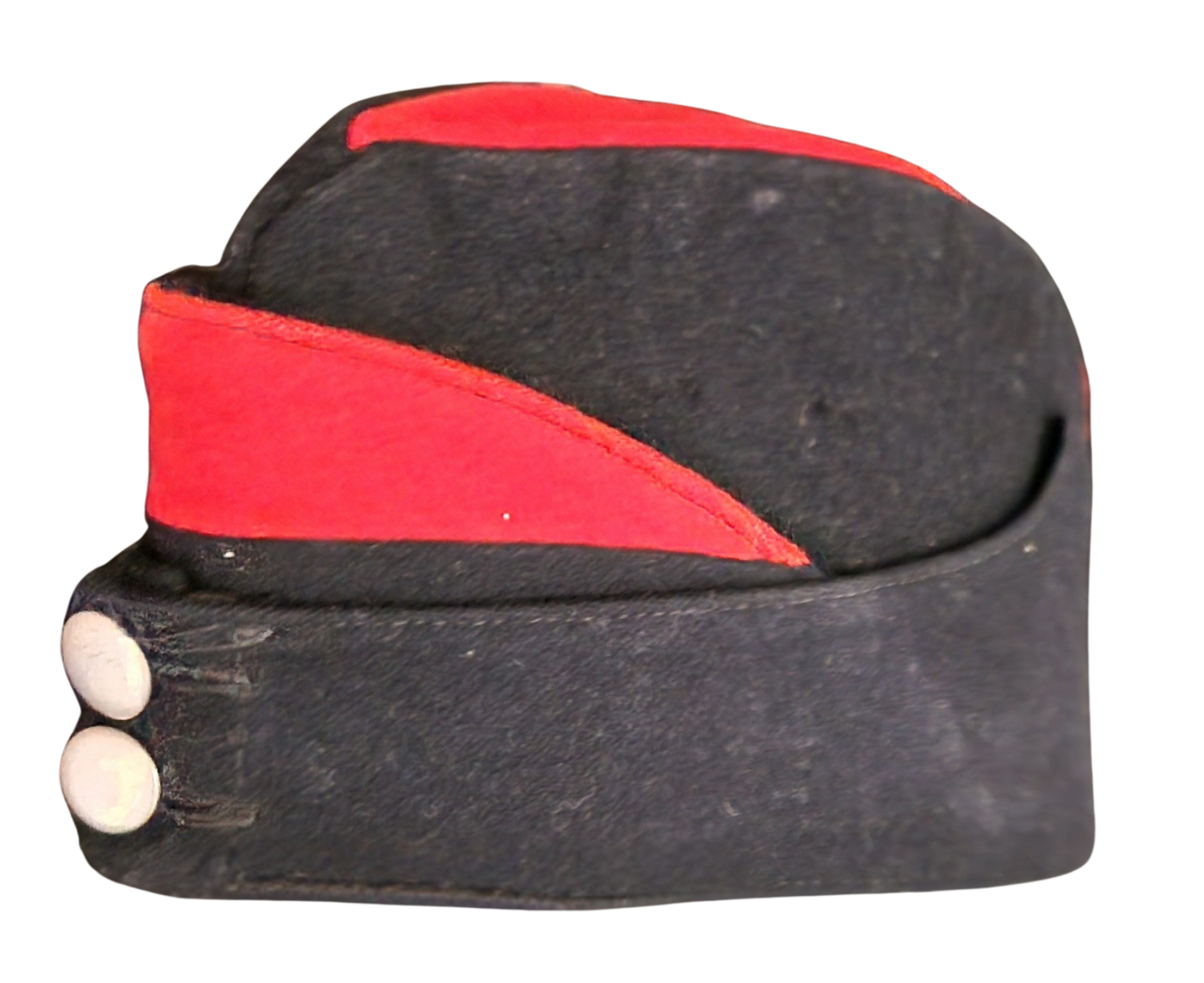
Women’s NFS Side Cap
Object Category: Uniform
Object Type: Side Cap
Object Name: Women’s NFS Side Cap
Service Category: Fire and Rescue
Accession: SHENE.2023.03
Visual Description: Dark blue and red folding side cap, made of wool with two plain brass buttons at the front.
Abstract: This side cap, also known as a field service cap, belonged to Marian Cryer (1916–1992) of the National Fire Service (NFS). Marian joined the NFS on 5th March 1942. The youngest of eight siblings, she served alongside her brothers at Malton Fire Station in North Yorkshire and trained at Minsteracres Fire Service College in County Durham.
Service Context: Wartime Response Services
The outbreak of the Second World War (1939–1945) led to the reorganisation of the UK’s emergency services into nationally coordinated wartime response units. Civilian volunteer services were formed in the run-up to war, including the Air Raid Precautions (ARP), which operated ambulance services and wardens from 1937, and the Auxiliary Fire Service (AFS), established in 1938. In 1941, the AFS merged with professional fire brigades to form the National Fire Service (NFS), while the ARP was renamed the Civil Defence Service.
Object Date: c.1942–1945
Museum Collection: Core Collection
Object Collection: Marian Cryer Collection
Source Category: Donation
Location: On Display
Associated Objects: AG: SHENE.2023.03
Associated Events: Second World War